 Skip to content



If you have burst or frozen pipes, the first move is simple. Turn off your mains water at the stopcock, switch off the heating, and open your cold taps to drain the system. That stops water pumping into the leak and limits the damage while you wait for help.
A burst pipe can dump litres of water into your home in minutes, so speed matters more than anything. Frozen pipes are the warning sign before a burst, and catching them early can save you a soaked ceiling and a hefty repair bill.
Below is the exact order of what to do, how to thaw a frozen pipe safely, and when to stop and call a plumber. Keep this handy, because the middle of a January night is not the time to be searching.
What to Do First When a Pipe Bursts in Your Home
When a pipe bursts, shut off the water and power before you do anything else. Find your internal stopcock, usually under the kitchen sink or near the front door, and turn it clockwise until it stops. Then kill the electricity to any area where water is near sockets or the fuse board.
Once the water is off, work through these steps in order.
- Turn off the mains stopcock to stop the water supply.
- Switch off the central heating and any immersion or electric water heater.
- Open all cold taps to drain the remaining water from the pipes.
- Cut the electricity at the fuse board if water is near wiring or sockets.
- Move furniture, electronics and rugs away from the leak.
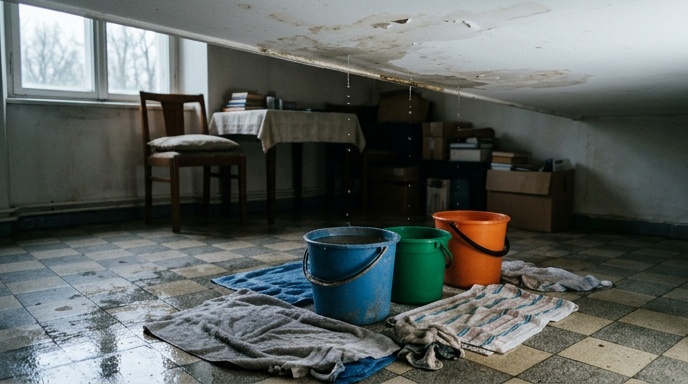
- Catch drips with buckets and towels, and take photos for your insurance.
Draining the system through the taps takes pressure off the burst, so even if the leak keeps dripping for a while, the flow should slow to a trickle. That buys you time until a plumber gets there.
How Do You Thaw a Frozen Pipe Safely?
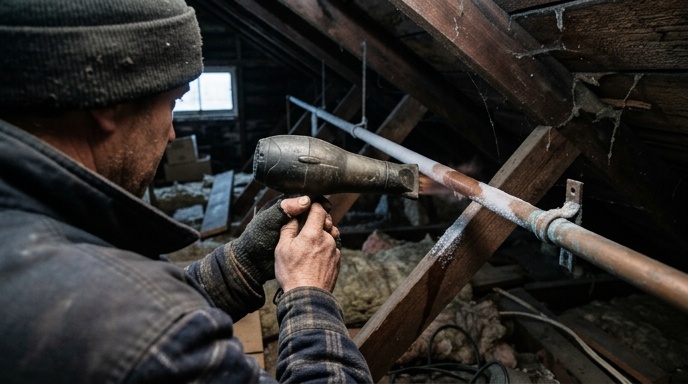
Thaw a frozen pipe slowly with gentle heat, starting at the end nearest the tap and working back towards the frozen section. Open the tap first so melting water has somewhere to go. Never rush it, because sudden heat can crack the pipe and turn a freeze into a burst.
What You Can Use to Warm the Pipe
Use a controlled, low heat source that you can hold steady on the pipe. Safe options include the following.
- A hairdryer on a warm setting, moved slowly along the pipe.
- Warm (not boiling) water poured over a cloth wrapped around the pipe.
- A hot water bottle held against the frozen section.
- An electric heater placed nearby to lift the room temperature.
What to Avoid When Thawing
Never use a naked flame, a blowtorch, or boiling water on a frozen pipe. Direct flame is a fire risk and can weaken joints, while boiling water expands the ice too fast and splits the pipe. Slow and steady is the only safe way.
If the tap starts running again as you warm the pipe, the thaw is working. Check the whole run afterwards for any splits or bulges, because a pipe can freeze, thaw and only then reveal a crack.
How to Spot a Frozen Pipe Before It Bursts
A frozen pipe usually shows itself through no water or a weak trickle from a tap during cold weather. You might also see frost on an exposed pipe, hear gurgling or banging when you run the tap, or notice a bathroom or radiator that has gone cold while the rest of the house is fine.
5 Common warning signs to watch for during a cold snap include the following.
- A tap that gives little or no water when turned on.
- Visible frost or condensation on an exposed pipe.
- Strange banging, gurgling or whistling from the pipework.
- A radiator or bathroom that stays cold when the heating is on.
- Damp patches or bulging on a pipe you can see.
Pipes in unheated spaces are the most at risk, so check the attic, garage, outside taps and any run along an external wall first. Catching a freeze here often means you can thaw it before it ever bursts.
When Should You Call an Emergency Plumber?
Call an emergency plumber the moment water is coming in faster than you can control, when a pipe has clearly burst, or when a freeze won’t thaw and you can’t reach the section. Water near electrics, a flooded room, or a leak you can’t isolate all count as urgent. There is no prize for waiting.
Some situations genuinely need a professional on site fast.
- A visible burst with water flowing that the stopcock hasn’t fully stopped.
- A leak behind a wall, under the floor, or in a spot you can’t get to.
- Water pooling near sockets, the fuse board, or light fittings.
- A frozen section you can’t locate or safely reach to thaw.
- Any smell of gas alongside the leak, which needs an RGI plumber immediately.
Fast arrival makes a real difference with a burst, which is why 24-hour emergency callout matters in the depths of winter. Our team is RGI registered and fully insured, so gas and water problems are handled to the standard the job needs. If you are unsure whether it’s an emergency, ring the line and describe what you’re seeing.
How to Stop Your Pipes Freezing in the First Place
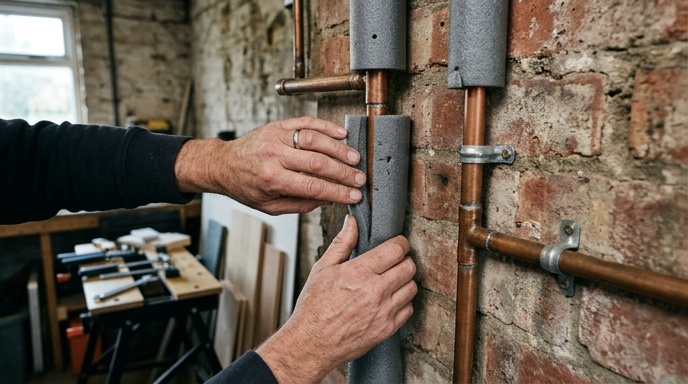
The best fix for frozen pipes is stopping them freezing at all, and that comes down to insulation and a bit of winter routine. Lag exposed pipes with foam sleeves, keep a low background heat on during cold snaps, and know where your stopcock is before you ever need it in a hurry.
Simple steps that prevent most winter pipe problems include the following.
- Fit foam pipe lagging on exposed runs in the attic, garage and outside walls.
- Leave the heating on a low setting overnight in freezing weather.
- Open the attic hatch a little to let warm air reach pipes up there.
- Drain and shut off outside taps before the first hard frost.
- Fix dripping taps, since a slow drip can freeze and block the pipe.
The Health and Safety Authority publishes general guidance on safe practices around the home, and it’s worth reading up on gas safety too if you have a gas boiler. A yearly boiler service and a check of your heating system before winter also flags weak spots before the cold finds them.
If you’d rather have someone check your pipework and lagging ahead of the freeze, or you’re standing over a burst right now, don’t wait it out. Call our 24-hour line on (01) 963 6090 for fast help, or request a quote and we’ll get you sorted.