 Skip to content



Power flushing radiators usually cost around €400 and €900 and are used to deep clean your central heating system that pushes water and cleaning chemicals through the pipes, radiators and boiler at high velocity to flush out sludge, rust and debris.
If your radiators are cold at the bottom, your boiler is making banging noises, or your heating takes an age to warm up, a power flush is often the fix. It restores circulation and efficiency without the cost of a full system replacement.
Below we cover what power flushing actually does, the clear signs you need one, what it costs in Ireland right now, and how the job is carried out from start to finish.
What Is Power Flushing and How Does It Work?
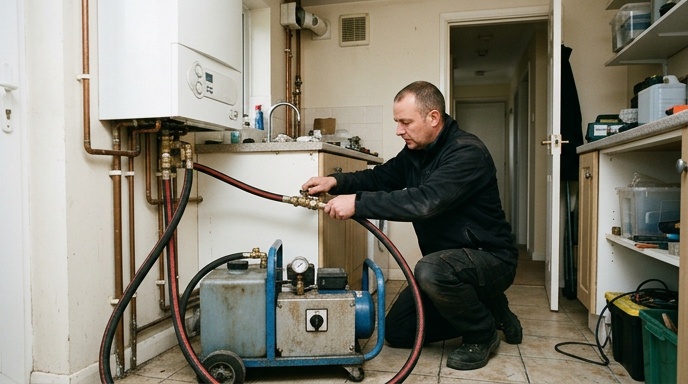
Power flushing is a process that connects a specialist pump to your central heating system and forces a mix of water and cleaning chemicals through it at high flow but low pressure. The aim is to break up and remove the black sludge, rust and limescale that build up inside radiators and pipework over years of use.
That sludge, known in the trade as magnetite, settles at the bottom of radiators and inside the boiler heat exchanger. Left alone, it restricts flow and forces the boiler to work harder for less heat.
The process usually runs in this order:
- The pump is connected to the system, often at the circulation pump or a radiator tail.
- A cleaning chemical is added to loosen the sludge and scale.
- Water is pushed through each radiator in turn to shift the debris.
- The system is drained and refilled with clean water.
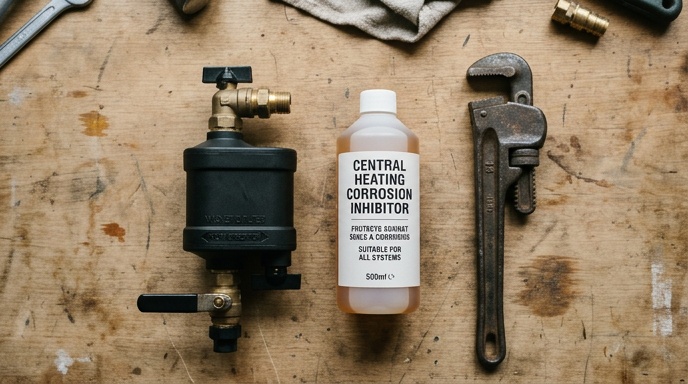
- A corrosion inhibitor is added to slow future build-up.
The result is faster, more even heating and a boiler that isn’t straining against a clogged system. A qualified installer will also fit a magnetic filter in many cases to catch loose debris going forward.
7 Signs You Need a Power Flush
You likely need a power flush when your radiators heat unevenly, your boiler is noisy, or your heating has become slow and expensive to run. These are the classic symptoms of sludge choking the flow of water around your system.
Watch for these 7 common warning signs:
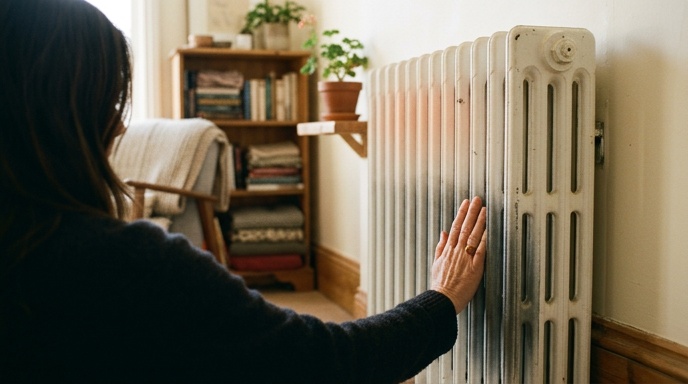
- Cold spots at the bottom of radiators while the top stays warm, a textbook sign of sludge settling.
- Radiators that need frequent bleeding but still won’t heat properly.
- Banging, gurgling or kettling noises from the boiler.
- Discoloured or dirty water when you bleed a radiator.
- Some radiators staying stone cold while others get hot.
- Heating that takes a long time to warm the house.
- A boiler that keeps cutting out or losing pressure.
One or two of these on their own might point to a simpler fix like a stuck valve or trapped air. Several together usually mean the system is clogged and a flush is the sensible next step.
Is It Sludge or Just Trapped Air?
Trapped air causes cold spots at the top of a radiator, while sludge causes cold spots at the bottom. If bleeding a radiator releases air and fixes the cold patch, you had air. If the bottom stays cold after bleeding, sludge is the more likely culprit and a flush is worth pricing.
When a Power Flush Won’t Fix the Problem
A power flush won’t rescue a boiler that has already failed or a system with a genuine mechanical fault like a broken pump or a seized valve. If your boiler is over 15 years old and struggling, it can be worth weighing a gas boiler replacement against the cost of flushing an ageing system.
What Does Power Flushing Cost in Ireland?
Power flushing in Ireland typically costs between €400 and €900, with most standard homes landing around €450 to €650. The final price depends mainly on how many radiators you have and how badly the system is blocked. Prices are estimates from current Irish trade sources and vary by home, so always confirm with a quote.
The number of radiators is the biggest single factor, since each one has to be flushed individually. A small flat with four radiators sits at the lower end, while a large house with a dozen or more will push toward the upper end.
| System Size | Typical Radiators | Estimated Cost |
|---|---|---|
| Small flat or apartment | Up to 6 | €400 to €500 |
| Average house | 7 to 10 | €500 to €700 |
| Large house | 11 or more | €700 to €900 |
A few other things move the price:
- Severity of the sludge, as very blocked systems take longer to clear.
- Whether a magnetic filter is fitted as part of the job.
- Ease of access to radiators and the boiler.
- Whether extra chemicals or a second flush are needed.
Since Irish plumbing prices aren’t published by any official body, treat these as a guide rather than a fixed rate. For an accurate figure on your own system, it’s worth getting a proper quote for the job based on your radiator count and boiler type.
Power Flush vs Chemical Flush vs New Boiler
A power flush uses a high-flow pump for a thorough clean, a chemical flush relies on circulating cleaner through the existing boiler pump, and a new boiler is the last resort when the appliance itself is finished. Choosing between them comes down to how blocked your system is and the age of your boiler.
Here’s how they compare in practice:
- Power flush is the most thorough clean and best for heavily sludged systems, using dedicated equipment to shift stubborn debris.
- Chemical flush is cheaper and lighter, suited to mild build-up, but it won’t clear a badly blocked system.
- New boiler makes sense when the boiler is old, inefficient or beyond economic repair, not just because the system is dirty.
A common mistake is fitting a shiny new boiler onto a filthy old system. The fresh boiler then sucks the old sludge into its heat exchanger and can be damaged fast. Most manufacturers require the system to be cleaned before a new boiler goes in, so a flush often pairs with a boiler service or an upgrade rather than replacing it.
Is Power Flushing Worth It?
Power flushing is usually worth it when your system is genuinely clogged, because it restores heating performance and protects your boiler for a fraction of the cost of a replacement. On a system that isn’t blocked, though, it’s money spent on a problem you don’t have.
The payback comes in a few ways. Your radiators heat evenly again, the boiler runs quieter, and it works less hard to warm the house, which shows up on your gas or oil bill over time. It also extends the life of the boiler by keeping abrasive sludge out of the pump and heat exchanger.
To get the most from a flush:
- Have a magnetic filter fitted at the same time to trap future debris.
- Make sure a corrosion inhibitor is added when the system is refilled.
- Book an annual boiler service to keep the system in good order.
If you’re a landlord, a well-maintained heating system also ties into your compliance duties, since the same visit can flag issues before they become an emergency. According to official SEAI guidance on home energy, an efficient heating system is one of the simplest ways to cut what you spend on keeping a home warm.
How Long Does a Power Flush Take?
A power flush usually takes between three and six hours for a standard home, depending on the number of radiators and how blocked the system is. A small flat can be done in a morning, while a large or heavily sludged house may take most of a day.
During the job you’ll be without heating and hot water while the system is drained and cleaned. A tidy installer will protect floors and carpets, since the water pulled from a dirty system is black and messy. You can read more on gas and heating safety through the Register of Gas Installers of Ireland, the body that oversees gas work here.
For a straight answer on whether your system needs a flush and what it’ll cost, call the 24-hour line or request a quote and our team will assess it for you.